Wealth tips & tricks
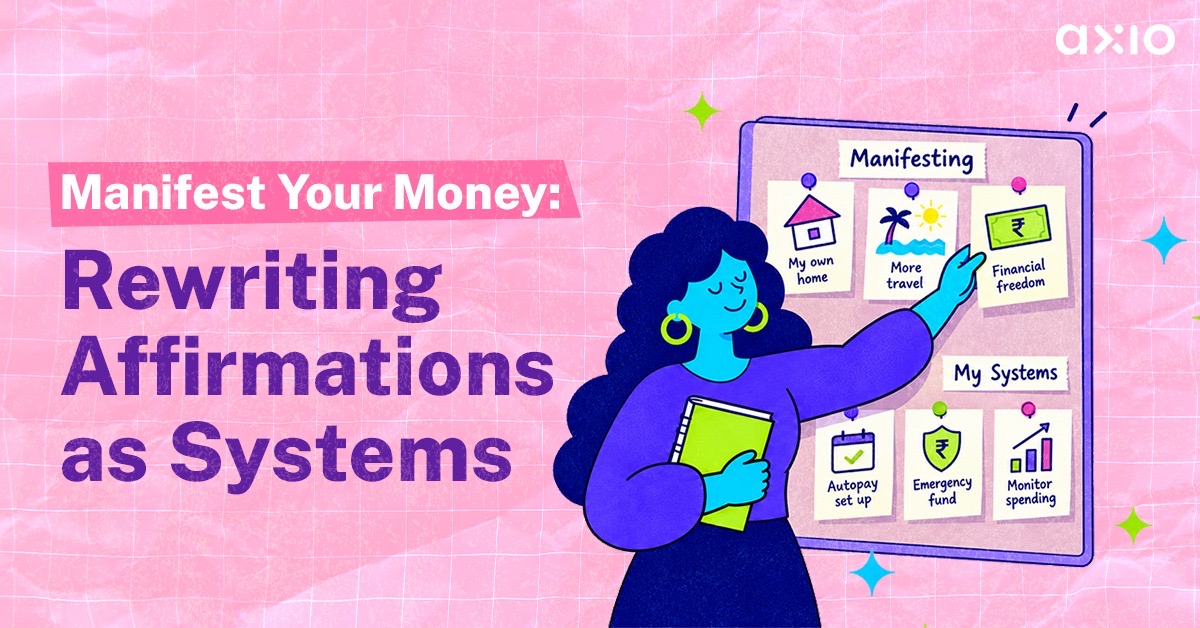
Manifest Your Money: Rewriting Affirmations as Systems

7 mins
September 16, 2026
Wealth tips & tricks
7 mins
September 16, 2026
"Money flows to me easily." "I am a magnet for abundance." "Paisa mera intezaar kar raha hai." Scroll Instagram Reels for five minutes and you'll find someone reciting these lines into a ring light, convinced repetition will fatten their bank balance. And to be fair, there's a real psychological case for affirmations. They can lower financial anxiety and prime you to notice opportunities. But priming isn't the same as producing. The sentence doesn't move the money. The system does.
Here's the reframe: every popular money affirmation has a boring, automatable twin. The original sets the intention. The system executes it whether or not you feel motivated that day. Say the affirmation if it helps, but what actually moves the money is the system behind it. Below are five of the internet's favourite affirmations, each translated into a recurring action you can actually set up once and forget about.
Translation: So does it, out.
Manifestation says money should move toward you effortlessly. Nobody mentions that it moves away from you just as effortlessly, one late-night order at a time. The system version is a standing UPI AutoPay or e-NACH mandate that redirects money into an SIP the day you get paid, before your future self gets a vote. This isn't folk wisdom. It's visible in how Indians actually invest now. Monthly SIP contributions have stayed above ₹31,000 crore for several consecutive months in 2026, up from a run-rate of roughly ₹27,000 crore a year earlier. That growth didn't come from stronger affirmations. It came from people setting up a mandate once and never having to decide again.
The lesson: "Flow" is real, but it's plumbing, not vibes. Build the pipe before you build the mood board.
Translation: Autopay remembers so I don't have to.
Saying this while missing an EMI due date actively works against you. Payment history is widely considered the single biggest driver of your CIBIL score, and lenders treat a missed payment as one of the strongest risk signals in your entire file. The system: put every loan EMI and credit card minimum on autopay via UPI AutoPay or NACH, so a busy week or a forgotten reminder never becomes an overdue entry with a lender. Then layer a separate, manual extra payment toward your highest-interest debt, usually the credit card, given how steep revolving APRs run in India.
The lesson: Debt-free thinking is a feeling. On-time payments are a record. Only one of them shows up on your credit report.
Translation: I attract it by using less of it.
Abundance, in credit terms, looks like unused limit. Lenders read low utilisation as a sign you're not stretched thin, and it's one of the most influential factors in your score after payment history. The general guidance from lenders is to stay comfortably under 30% utilisation, with scores tending to improve further as you drop toward single digits. The system: set a balance alert at 30% of each card's limit (most major Indian banking apps support this for free) so you catch a creeping balance before the statement generates, instead of discovering the damage after your next loan application gets a worse rate.
The lesson: The universe isn't tracking your vibrations. Your bank is tracking your balance-to-limit ratio. Manage the one that's actually watching.
Translation: Worthy, with a recurring deposit.
Worthiness doesn't build a cushion. A recurring auto-debit into a separate liquid fund or recurring deposit does. The mechanism is the same one that's made SIPs India's biggest retail investing habit: removing the weekly choice removes the weekly excuse. NPCI has reported that a significant share of UPI AutoPay mandates get revoked every month, largely because there wasn't enough balance in the account to honour them. The fix isn't fewer mandates. It's sequencing your emergency-fund SIP right after payday, before discretionary spending gets first claim on the balance.
The lesson: Automation only works if you feed it first. Pay your future self before you pay for dinner.
Translation: I release the habit of forgetting bills.
Nothing manufactures scarcity like a mobile recharge lapsing or a card late fee stacking on an already tight month. Automating fixed bills (rent, utilities, insurance premiums, subscriptions) removes the single most common source of self-inflicted scarcity: forgetting. It's also gotten dramatically easier to do at scale. UPI e-mandate transactions processed by India's top 10 banks roughly tripled in a year, from about 585 million in July 2025 to nearly 1.8 billion in July 2026, as more recurring payments moved onto autopay rails. Combined with the payment-history point above, this is arguably the highest-leverage system on this list: it protects the factor your score cares about most, while freeing your mental bandwidth for the money decisions that actually require judgment.
The lesson: Scarcity isn't a mindset you release. It's a bill you forgot. Automate the forgettable stuff so your willpower is free for the decisions that actually need it.
None of this is anti-affirmation. Say the sentence if it keeps you motivated, because belief matters too. But the good news is you don't have to choose between manifesting and managing your money. Set the system up once, and every affirmation you say afterward stops being a hope and starts being true. That's the real magic here: not that money appears out of nowhere, but that you built something that keeps working even on the days you forget to believe in it. Manifestation gets you to start. The system carries you the rest of the way.
.svg)
.svg)
axio (formerly known as Capital Float, Walnut & Walnut 369) is the brand name of CapFloat Financial Services Private Limited, an NBFC registered with the RBI.
© 2025 axio. All rights reserved

